

Conference Details
Intelligent Quantum Computing, Generative Artificial Intelligence (AI), and Autonomous Systems are among the most rapidly evolving technologies driving innovation across academia, industry, and government. These technologies are transforming diverse application domains, including healthcare, manufacturing, cybersecurity, transportation, finance, and smart infrastructure, by enabling intelligent decision-making, advanced automation, and high-performance computing. Their convergence has opened new avenues for interdisciplinary research and technological advancement. The International Conference on Intelligent Quantum Computing, Generative AI and Autonomous Systems (IQGAS 2027) aims to provide an international platform for researchers, academicians, industry experts, and students to present recent research findings, exchange innovative ideas, and foster collaborations in these emerging areas. The conference will encourage interdisciplinary discussions, promote academia–industry interaction, and contribute to the advancement of next-generation intelligent computing technologies.
The conference welcomes a diverse community of participants from academia, research, industry, and government. It is designed for faculty members, researchers, scientists, professionals, policymakers, and innovators from universities, higher educational institutions, national and international research organizations, industry and corporate R&D laboratories, government organizations, technology companies, startups, and innovation centers. The event also provides an excellent platform for research scholars, postgraduate students, and undergraduate students in Computer Science and allied disciplines to present their work, exchange ideas, and engage with leading experts in the field.
Accepted and presented papers will be considered for publication in the Springer Conference Proceedings, subject to meeting the publisher's quality standards and publication requirements.
About University
The Fakir Mohan University, Vyasa Vihar, Balasore was established by the Government of Odisha, under Section 32 of the Odisha Universities Act, 1989 (Act 5 of 1989) and it was notified vide the Government's Notification No. 973 dated 3rd July, 1999. The University has also been duly recognized by the University Grant Commission (UGC) under section 2(f) of the UGC Act by the Notification No. F-9-1 / 2000 (CPP-I), dated 11th February 2000 as well as under section 12(B), vide UGC letter No. F.9-1 /2000 (CPP-I) dated 23rd December, 2005. The University is accredited by the Association of Indian Universities (AIU), vide their letter No. Meet: SC: 261:2K/108693, dated 22nd August, 2000 and by the NAAC with ‘A’ grade in 2023. The University ranked 151-200 in the NIRF ranking since 2023. The Fakir Mohan University is also a member of Association of Commonwealth Universities (ACU), UK. At Present, the University is functioning from its two campuses; the Old Campus at Ganeswarpur, Januganj, besides the National Highway near Remuna Golei (around 3 km from Balasore Bus Stand and Railway Station) and the New Campus at Nuapadhi (around 15 km from Balasore Bus Stand and Railway Station). The University is an affiliating University and for now, more than ninety (90) degree colleges coming under its jurisdiction with twenty-six Post Graduate Departments. The University is committed to its objective of producing qualified and competent human resource responsive to the changing needs of the society. Standing firm on its motto– “Education is Nectar”; the University has started its journey from rural East India to quench up thirsts of knowledge through teaching and research development.
About Department
The Department of Computer Science at Fakir Mohan University, Balasore, established in 2004, is dedicated to excellence in teaching, research, and innovation in the fields of Computer Science and Information & Communication Technology. Since its inception, the department has been offering postgraduate programmes and doctoral research, with a strong commitment to developing highly skilled professionals for academia, industry, government, and research organizations. The department fosters an interdisciplinary learning environment that emphasizes both theoretical foundations and practical applications.
With a team of experienced faculty members and modern computing facilities, the department actively promotes high-quality research in emerging areas such as Artificial Intelligence, Machine Learning, Data Science, Cyber Security, Digital Forensics, Robotics, Internet of Things (IoT), Cloud Computing, and Intelligent Systems. It encourages collaborative research, industry interaction, innovation, and lifelong learning among students and researchers.
The department regularly organizes national and international conferences, workshops, seminars, faculty development programmes, and expert lectures to facilitate knowledge exchange and strengthen academia–industry collaboration. Through these initiatives, the Department of Computer Science strives to create a vibrant research ecosystem, nurture innovation, and contribute to technological advancements that address societal and global challenges.
Themes
Select a track to see the topics it covers
Artificial Intelligence and Intelligent Computing
- Machine Learning and Deep Learning
- Natural Language Processing
- Computer Vision and Pattern Recognition
- Knowledge Representation and Reasoning
- Data Mining and Knowledge Discovery
- Intelligent Decision Support Systems
- AI Applications in Healthcare, Agriculture, Education, and Climate Science
Quantum Computing and Quantum Intelligence
- Quantum Computing and Information Processing
- Quantum Machine Learning
- Quantum Algorithms and Optimization
- Quantum Communication and Cryptography
- Quantum Error Correction and Fault Tolerance
- Hybrid Quantum–Classical Computing
- Quantum Applications in Science and Engineering
Generative AI and Foundation Models
- Large Language Models (LLMs)
- Generative AI and Foundation Models
- Multimodal AI
- AI Agents and Autonomous Agents
- Prompt Engineering and Retrieval-Augmented Generation (RAG)
- Explainable, Responsible, and Trustworthy AI
- AI Ethics, Safety, and Governance
Autonomous Systems and Robotics
- Autonomous Robots and Intelligent Automation
- Autonomous Vehicles and UAVs
- Human–Robot Interaction
- Intelligent Control Systems
- Multi-Agent Systems
- Digital Twins and Smart Manufacturing
- Intelligent Transportation Systems
Intelligent Digital Infrastructure
- Internet of Things (IoT)
- Cyber-Physical Systems
- Embedded Systems
- Edge and Cloud Computing
- High-Performance Computing
- Intelligent Sensor Networks
- Smart Cities and Digital Infrastructure
Emerging Computing Technologies
- Cybersecurity and Privacy
- Blockchain and Distributed Ledger Technologies
- Secure AI and Quantum-Safe Security
- Green and Sustainable Computing
- Next-Generation Digital Technologies
Call for Papers
The International Conference on Intelligent Quantum Computing, Generative AI and Autonomous Systems (IQGAS 2027) invites original research papers, innovative ideas, and practical case studies from researchers, academicians, industry professionals, and R&D organizations worldwide. The conference aims to provide a multidisciplinary platform for presenting recent research advancements, exchanging knowledge, and addressing emerging challenges in intelligent computing, quantum technologies, generative AI, autonomous systems, and their applications across diverse engineering domains.
All accepted and presented papers will be published in the Springer Nature book series Learning and Analytics in Intelligent Systems (Scopus-indexed), subject to meeting the publisher's quality standards and publication requirements.
The official IQGAS 2027 Paper Submission Link is:
https://cmt3.research.microsoft.com/IQGAS2027
Submissions are welcome in, but not limited to, the six conference tracks.
View Conference ThemesSubmission Guidelines
- Authors are invited to submit original, unpublished research papers that are not under consideration for publication elsewhere.
- Manuscripts must be prepared in the Springer Conference Proceedings format, using the Word or LaTeX template provided below.
- Each paper must be reviewed by at least two independent experts.
- Each paper should be 10 pages in length.
- The papers included in the volume must fall within the scope of the conference.
- Only high-quality papers should be accepted.
- The literature review section of each paper must include references to recently published work.
- Only high-quality and relevant references should be cited.
- Each paper must include appropriate keywords.
- Machine-generated papers and fabricated references are not acceptable.
- Up to 30 high-quality papers may be accepted for publication. The conference proceedings should not contain more than 30 papers.
Paper Templates
Important Declaration
- It is the sole responsibility of the authors to ensure that the submitted manuscript is free from plagiarism and follows all ethical standards.
- Any paper found to have significant plagiarism, improper citation, or ethical violations at any stage, including after acceptance, may be rejected or excluded from publication.
- In such cases, the organising committee shall not be held responsible for non-publication, and no refund of the registration fee will be provided.
Important Dates
KEYNOTE SPEAKERS
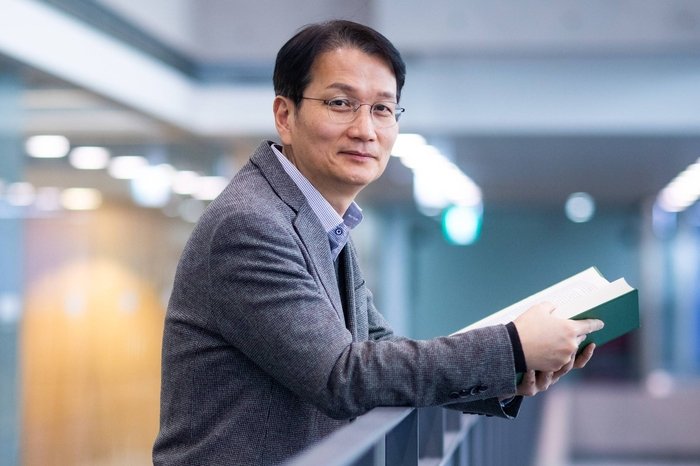
Prof. Sung-Bae Cho
Yonsei University, South Korea
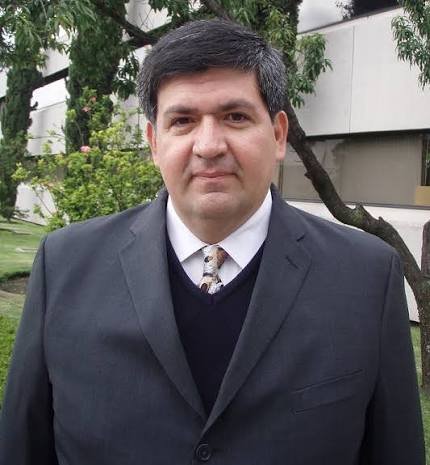
Prof. Carlos A. Coello Coello
CINVESTAV, Mexico
INVITED SPEAKERS
Prof. Pabitra Mitra
IIT Kharagpur
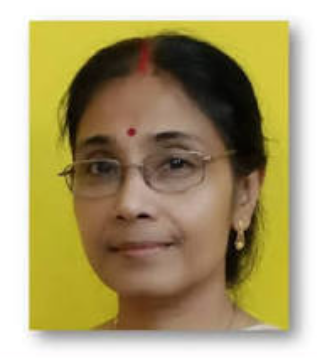
Prof. Susmita Ghosh
Jadavpur University
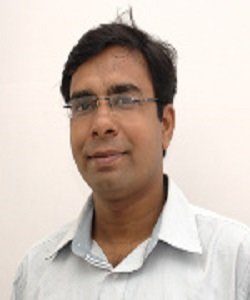
Prof. Aryabartta Sahoo
IIT Guwahati
Prof. Bhawani Sankar Panda
IIT Delhi
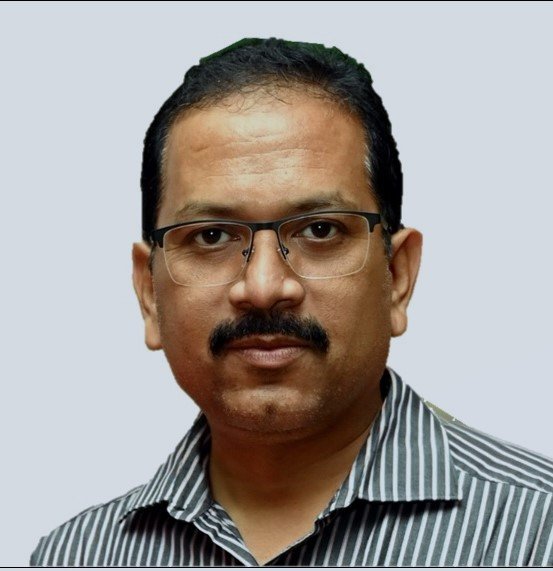
Prof. Saroj Kumar Meher
IISC Bangalore
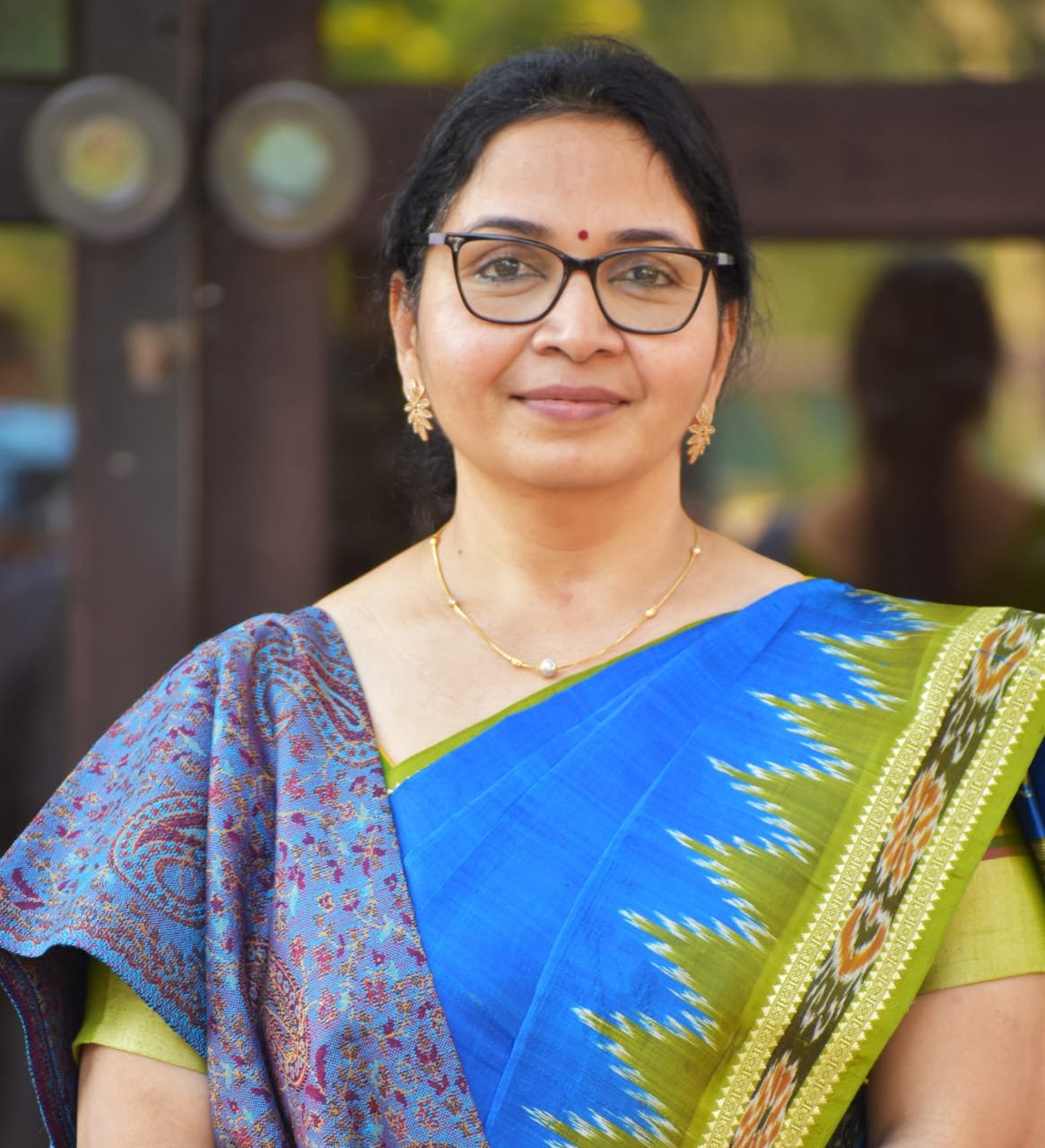
Dr. Suchismita Chinara
NIT Rourkela
Session Chairs
- Prof. Himabindu Maringanti, MSCBU
- Prof. Mrutyunjaya Panda, Utkal University
- Prof. Sujata Dash, Nagaland University
- Dr. Alok Ranjan Tripathy, Ravenshaw University, Cuttack
- Dr. Sanjay Panda, NIT Warangal
- Prof. Bibhudendu Pati, R.D. Women's University
- Dr. Janmenjoy Nayak, MSCBU
- Dr. Satya Narayan Tripathy, Berhampur University
- Dr. Satyabrata Das, VSSUT, Burla
- Dr. Sarat Chandra Nayak, GITAM, Hyderabad
Mentors & Organising Committee Members
Chief Patron

Prof. Santosh Kumar Tripathy
Vice-Chancellor,
F. M. University
Patron
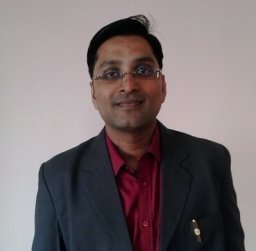
Prof. Santosh Kumar Agarwalla
Chairman, Post Graduate Council, F. M. University
National Advisory Committee
- Prof. Rajib Mall, IIT Kharagpur
- Prof. Ashish Ghosh, Director, IIIT Bhubaneswar
- Prof. Siba Kumar Udgata, University of Hyderabad
- Prof. Amiya Kumar Rath, Vice-Chancellor, BPUT
- Prof. Manas Ranjan Patra, Berhampur University
- Prof. Sabyasachi Pattanaik, Retired Prof., Dept. of CS, F.M. University
- Prof. Saroj Kumar Meher, ISI, Bangalore
- Prof. Somanath Tripathy, Dept. CSE, IIT, Patna
- Prof. Aryabartta Sahoo, IIT Guwahati
- Prof. Bhawani Sankar Panda, IIT Delhi
- Prof. Mayuri Mehta, Sarvajanik University, Surat
- Prof. S. Nagini, VNR VJIET, Hyderabad
International Advisory Committee
- Prof. Margarita N. Favorskaya, Siberian State Aerospace University, Russia
- Prof. George A. Tsihrintzis, University of Piraeus
- Prof. Chen, Yen-Wei, College of Information Science and Engineering, Ritsumeikan University, Kyoto
- Prof. Gi-Name Wang, Ajou University, South Korea
- Prof. Euiwhan Kim, Ajou University, South Korea
- Prof. Rajkumar Buyya, University of Melbourne, Australia
- Prof. Robertas Damasevicius, Kaunas University of Technology, Lithuania, Europe
- Prof. Amir H. Gandomi, University of Technology Sydney, Australia
HONORARY CHAIRS

Prof. L. C. Jain
University of Piraeus, Athens, Greece

Prof. A. Esposito
Università della Campania “L. Vanvitelli”, Italy and University of Budapest, Budapest Hungary
GENERAL CHAIRS
Prof. Pabitra Mitra
IIT Kharagpur
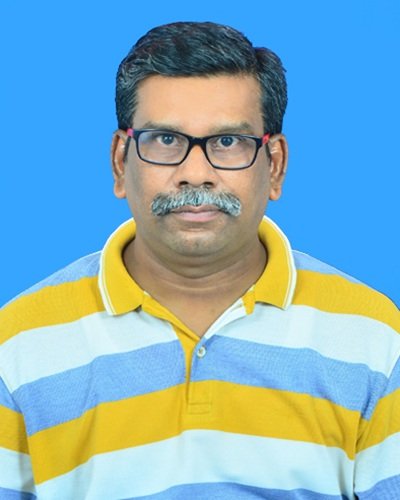
Prof. Satchidananda Dehuri
F. M. University
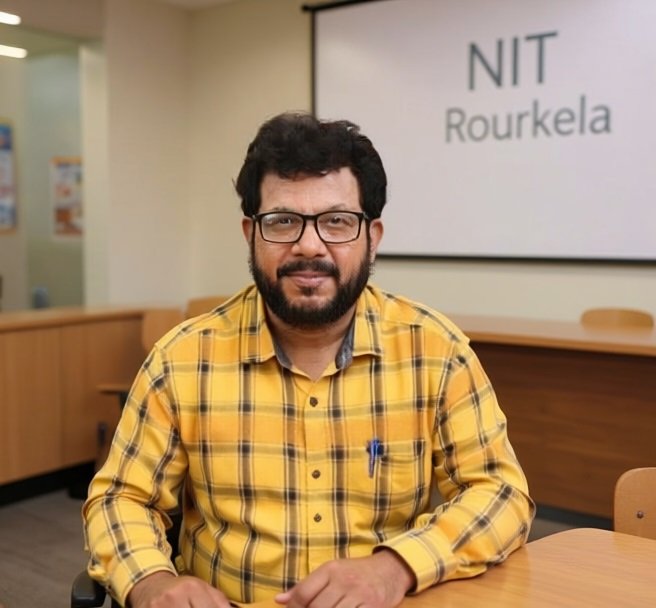
Prof. Bibhudatta Sahoo
NIT Rourkela
Program Chair
Dr. Minati Mishra
Head, Dept of Computer Science, F. M. University
Convenor

Dr. Monalisa Jena
F. M. University
Co-convenor
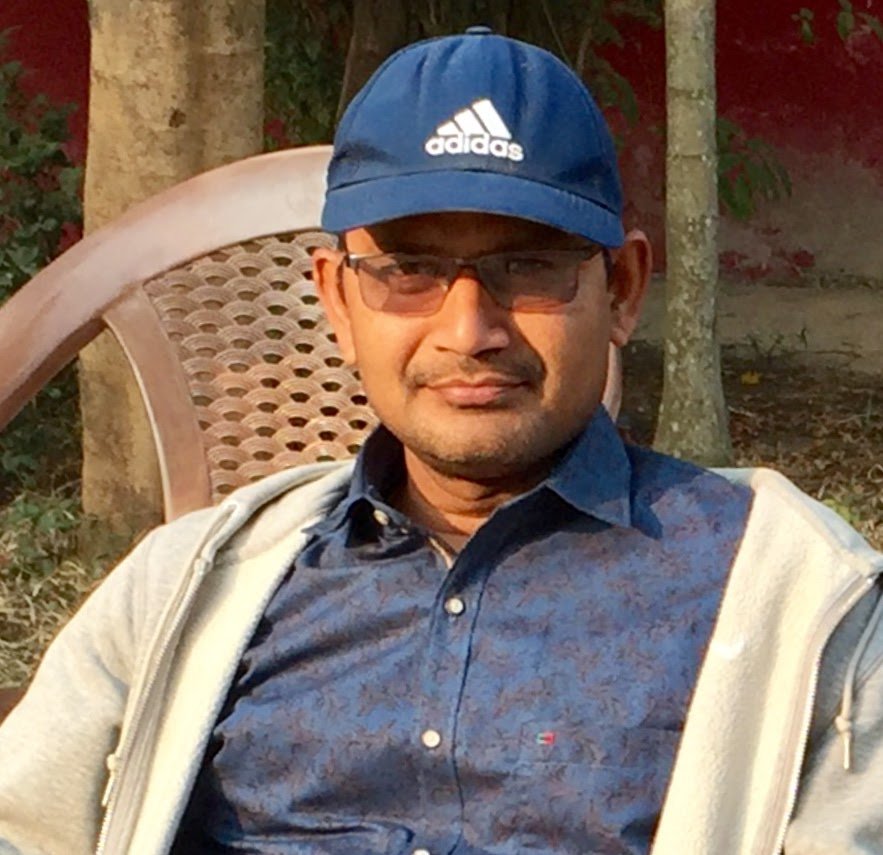
Prof. Ashanta Ranjan Routray
F. M. University
Technical Programme Committee
Chair
- Prof. Sung-Bae Cho, Yonsei University, South Korea
- Prof. Carlos A. Coello Coello, CINVESTAV, Mexico
- Prof. D. P. Mohapatra, NIT Rourkela
- Dr. Debi Prosad Dogra, IIT Bhubaneswar
- Dr. Suchismita Chinara, NIT Rourkela
Members
- Prof. Dillip Datta, Tezpur University
- Prof. Suvendu Rup, NIT Raipur
- Prof. Rowdra Ghatak, NIT Durgapur
- Dr. Shantipriya Parida, Senior AI Scientist at Silo AI, Finland
- Dr. Alok Ranjan Tripathy, Ravenshaw University, Cuttack
- Dr. Swarupananda Bissoyi, MSCBU
- Dr. Janmenjoy Nayak, MSCBU
- Dr. Prasant Ku. Swain, MSCBU
- Dr. Bonomali Khuntia, Berhampur University
- Dr. Satya Narayan Tripathy, Berhampur University
- Dr. Pradeep Kumar Mallick, KIIT University, Bhubaneswar
- Dr. Niladri Roy, Scientist ‘G’, ITR, DRDO, Chandipur
- Dr. Chandan Sobha Nayak, IIIT Bhubaneswar
- Dr. Rama Padhy, IIT Bhubaneswar
- Dr. Manoj Patra, NIT Warangal
- Dr. Sourav Bhoi, PMEC, Berhampur
- Dr. Anisha Kumari, NIT Allahabad
- Dr. Supreeti Kamiliya, BIT Mesra
- Dr. Jit Mukharjee, BIT Mesra
- Dr. Jitendra Rout, NIT Raipur
- Dr. Dharavath Ramesh, IIT Dhanbad
- Dr. Ranjan Kumar Behera, IIIT Ranchi
- Dr. Kshira Sagar Sahoo, SRM University, AP
- Dr. Rojalina Priyadarshini, C. V. Raman Global University
- Dr. Priyabrat Garanayak, IIIT Ranchi
- Dr. Deba Chudamani Prusty, KIIT University
- Dr. Sushree B. Priyadarshini, SOA University
- Dr. Sambit Mishra, SRM University, AP
- Dr. Kishore Kumar Sahu, VSSUT, Burla
- Dr. Sharmila Subudhi, MSCBU
- Dr. Partha Sarathi Mishra, MSCBU
- Dr. Badri Subudhi, IIT Jammu
- Dr. Trilochan Panigrahi, NIT Goa
- Dr. Tapas Mishra, SOA University
- Mr. Rajeeb Senapati, Sr Manager (IT), OMC
Organizing Committee Members
- Prof. Satchidananda Dehuri, Dept. of CS, FMU
- Prof. Ashanta Ranjan Routray, Dept. of CS, FMU
- Dr. Pabitrananda Patnaik, PoP, Dept. of CS, FMU
- Dr. Minati Mishra, Dept. of CS, FMU
- Dr. Manaswini Pradhan, Dept. of CS, FMU
- Dr. Monalisa Jena, Dept. of CS, FMU
- Mr. Rama Chandra Dey, Dept. of CS, FMU
- Dr. Amit Kumar Sharma, Dept. of Mathematics, FMU
- Dr. Sushomita Mohanta, Dept. of Mathematics, FMU
- Dr. Avaya Naik, Dept. of Mathematics, FMU
- Dr. Asim Amitabh, Dept. of Geology, FMU
- Dr. Manojit Bhattacharya, Dept. of Zoology, FMU
Tutorial Chair
- Prof. Saroj Kumar Meher, ISI, Bangalore
Publicity & Web Master
- Ms. Barsa Priyadarshani Behera, Dept. of CS, FMU
- Mr. Ashish Pradhan, Dept. of CS, FMU
- Mr. Lalitendu Rout, Dept. of CS, FMU
- Mr. Pankaj Dhal, Dept. of CS, FMU
Finance Committee
- Dr. Bhabanisankar Jena, ITR, DRDO, Chandipur
- Mr. Nikhilananda Dhal, Dept. of CS, FMU
Registration & Payment details
| Category | Registration Fee |
|---|---|
| Faculty/Academicians | ₹7000 |
| Research Scholars/Students | ₹6000 |
| Industry Professionals | ₹8000 |
Accommodation
Accommodation
Accommodation is available on a paid basis. Below are the available options:
- F.M. University-HRDC Building (Limited Availability)
- Hotels: Glory, Swarnchudda, Suraj, Chandrbhaga, Jhadeswar (Near Balasore Bus & Railway Station)
Visit Us at Our Venue
We are located at New Campus of Fakir Mohan University. Come and join us for a wonderful experience!
Vyasa Vihar, Balasore, Odisha, India-756089.